Warmest Florida Beach Towns in Winter: NOAA Temperatures by Town
The warmest Florida beach towns in winter are in the Florida Keys and along the southeast coast. Key West has the mildest January of any major Florida weather station, averaging a 75.8°F high and a 65.5°F low, and Miami and Fort Lauderdale run close behind. For most travelers, though, the best-balanced pick is Palm Beach County: January afternoons average 74.7°F at West Palm Beach, and the ocean off Lake Worth Beach averages 74.5°F in January, the warmest January water of any Florida site in NOAA’s coastal water-temperature table. Every temperature in this guide comes from NOAA: the 1991–2020 U.S. Climate Normals published by the National Centers for Environmental Information (NCEI), plus NOAA’s Coastal Water Temperature Guide.
Quick answer: the warmest Florida beach towns in winter
- Warmest overall: Key West and the Middle Keys. Key West’s January normal is 75.8°F/65.5°F, and nights at or below 50°F average about one a month.
- Best balance of warm air and warm water: Palm Beach County, from Jupiter to Boca Raton. West Palm Beach averages 74.7°F/57.9°F in January, with 74.5°F ocean water at Lake Worth Beach Pier.
- Warmest big-city beaches: Miami (76.2°F/61.0°F at Miami International) and Fort Lauderdale (75.6°F/60.9°F).
- Warm, dry afternoons on the Gulf: Naples and Fort Myers, with January highs near 75°F but cooler nights and much cooler water (about 67°F at Naples).
- Mild, not tropical: Vero Beach, Sarasota and St. Pete/Clearwater, with January highs from 69°F to 73°F.
- Coolest Florida beaches in winter: Daytona Beach and the Panhandle. Destin and Pensacola average January highs around 63°F and lows in the mid-40s.
Planning a bigger trip? Our Florida vacation guide compares every region, and the Florida beach vacation guides hub links to each destination guide.
Florida winter temperatures compared: NOAA normals by beach town
The table lists the official 1991–2020 monthly normals for the NOAA station nearest each beach town: the average daily high and low for December, January and February. The last column is the average January water temperature where NOAA publishes one for a nearby coastal site. Towns are sorted from warmest to coolest by January average temperature.
| Beach town | NOAA station | Dec high / low | Jan high / low | Feb high / low | Jan water (NOAA site) |
|---|---|---|---|---|---|
| Key West | Key West Intl Airport | 77.7 / 68.3 | 75.8 / 65.5 | 77.4 / 67.1 | 72.5 (Key West) |
| Marathon (Middle Keys) | Marathon Airport | 77.9 / 67.5 | 75.8 / 64.2 | 78.1 / 66.4 | — |
| Miami / Miami Beach | Miami Intl Airport | 78.2 / 64.3 | 76.2 / 61.0 | 78.2 / 63.2 | 72.5 (Virginia Key) |
| Fort Lauderdale | Fort Lauderdale/Hollywood Intl Airport | 77.7 / 64.7 | 75.6 / 60.9 | 77.4 / 63.3 | — |
| Palm Beach County (West Palm Beach) | Palm Beach Intl Airport | 76.5 / 61.5 | 74.7 / 57.9 | 76.7 / 60.1 | 74.5 (Lake Worth Pier) |
| Naples | Naples Municipal Airport | 77.3 / 59.0 | 74.8 / 55.9 | 77.2 / 57.9 | 66.7 (Naples) |
| Fort Myers | Page Field Airport | 77.3 / 57.3 | 75.0 / 54.3 | 78.0 / 56.6 | — |
| Vero Beach | Vero Beach Regional Airport | 75.4 / 56.1 | 73.3 / 52.2 | 75.6 / 54.5 | — |
| Sarasota / Bradenton | Sarasota-Bradenton Intl Airport | 75.2 / 55.2 | 72.5 / 52.3 | 74.9 / 54.6 | 64.2 (Venice) |
| St. Petersburg / Clearwater | St. Petersburg (Albert Whitted Airport) | 71.5 / 58.7 | 69.0 / 55.3 | 71.9 / 57.9 | 61.5 (Clearwater Beach) |
| Daytona Beach | Daytona Beach Intl Airport | 71.5 / 52.1 | 69.0 / 48.5 | 71.7 / 51.1 | — |
| Destin / Fort Walton Beach | Destin-Fort Walton Beach Airport | 65.6 / 47.5 | 63.1 / 45.3 | 65.8 / 47.9 | 59.5 (Panama City Beach) |
| Pensacola Beach | Pensacola Intl Airport | 65.1 / 45.9 | 62.7 / 43.7 | 66.4 / 47.2 | 56.9 (Pensacola) |
All air temperatures are in degrees Fahrenheit. Sources: NOAA NCEI U.S. Climate Normals, 1991–2020 (monthly station files, for example Palm Beach International and Key West International); water: NOAA NCEI Coastal Water Temperature Guide monthly averages. A dash means NOAA does not list a water site close enough to that town.
Two patterns stand out. First, the southeast coast and the Keys keep their nights warm: Miami’s January low is about 61°F, while Naples, at a similar latitude on the Gulf, drops to about 56°F. Second, the Atlantic side from Palm Beach south has far warmer winter water than the Gulf. In January the ocean at Lake Worth Beach averages 74.5°F; at Clearwater Beach it is 61.5°F.
Palm Beach County: the warm-water sweet spot
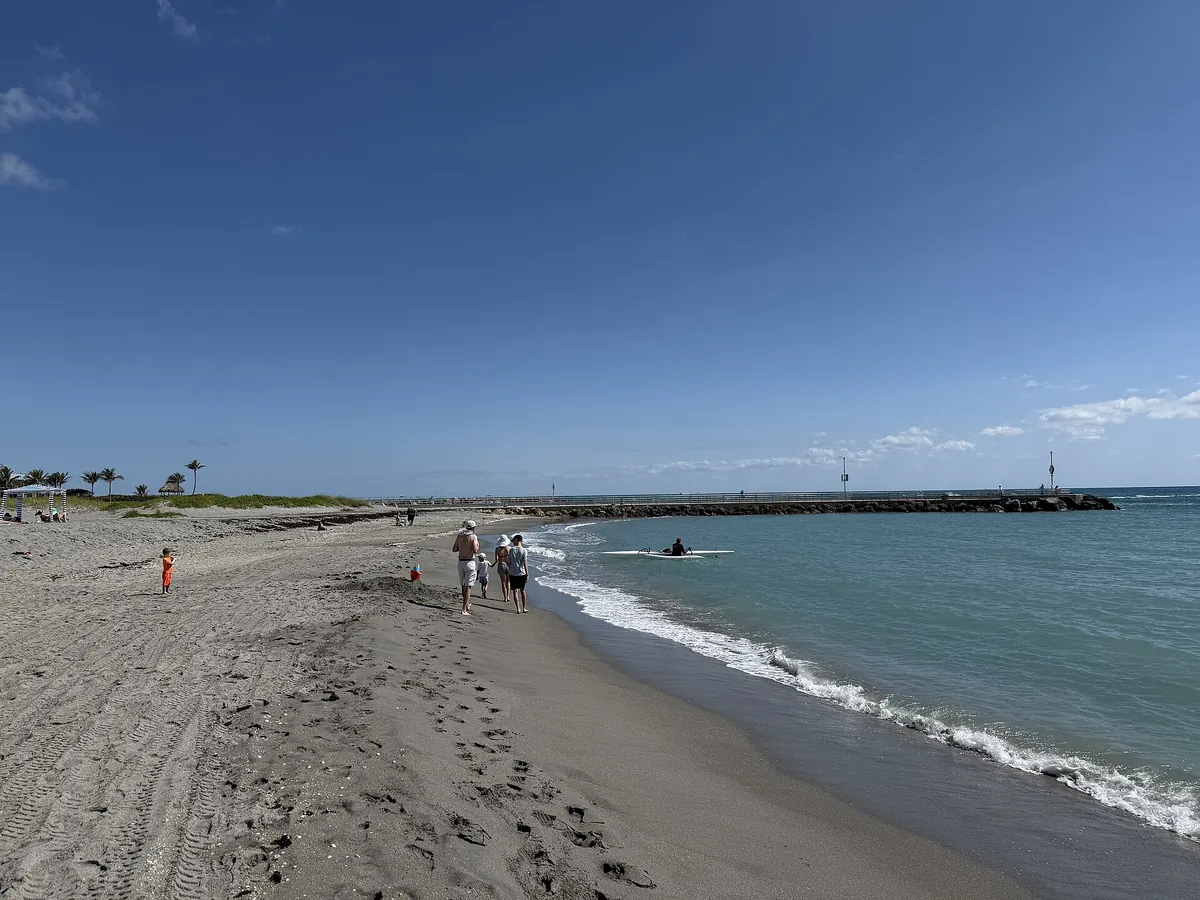
Palm Beach County is not the single warmest place in Florida, but it is the best combination of warm air, warm water and easy logistics for a winter beach trip. NOAA’s normals for Palm Beach International Airport put January at 74.7°F for the average high and 57.9°F for the low, with December (76.5°F/61.5°F) and February (76.7°F/60.1°F) a little warmer. On an average January, 25.9 days reach 70°F or warmer, about the same as Key West’s 25.7.
The real advantage is the ocean. NOAA’s Coastal Water Temperature Guide gives Lake Worth Pier a monthly average of 76.7°F in December, 74.5°F in January and 74.8°F in February. That December and January water is the warmest of any Florida site in NOAA’s table, warmer even than Key West (75.3°F and 72.5°F). The reason is the Gulf Stream: NOAA’s U.S. Coast Pilot notes that off West Palm Beach it runs “only about 2 miles (4 km) offshore.”
The tradeoff is cooler nights than Miami or the Keys. West Palm Beach averages 7.5 January nights at or below 50°F, compared with 3.5 in Miami and about one in Key West, so pack a light jacket for dinner. Afternoons on the sand are usually warm enough for swimming for most visitors.
Where to base yourself
- Jupiter and Juno Beach: the northern end of the county, with family-friendly beach parks and the Juno Beach Pier.
- The island of Palm Beach: classic resort hotels and Worth Avenue, with the public Palm Beach Municipal Beach nearby.
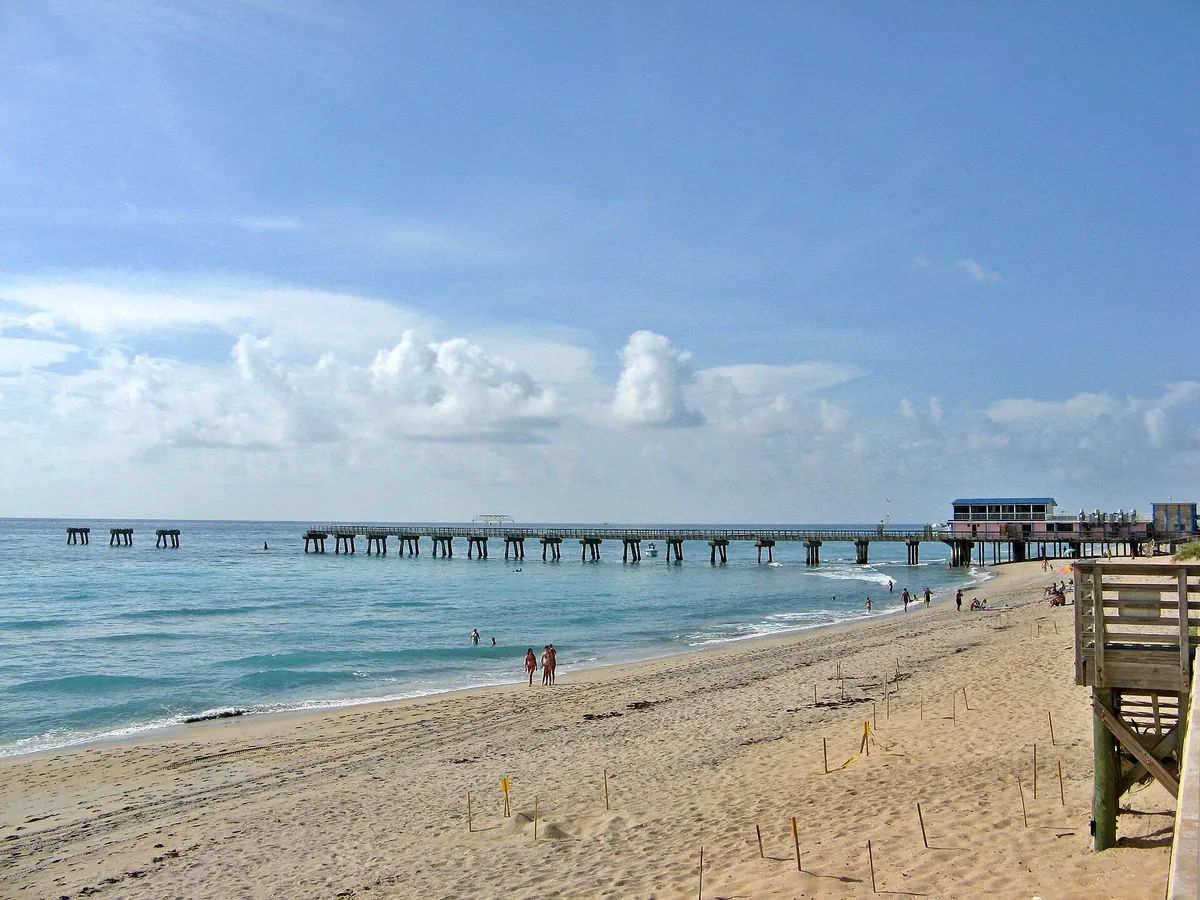
- Lake Worth Beach: a casual town beach and pier, right where NOAA measures that warm winter water.
- Delray Beach and Boca Raton: walkable downtowns and beaches in the south of the county, the closest to Fort Lauderdale.
Our Palm Beach County vacation guide covers every town, beach and resort in detail. Winter is also peak golf season here; see the PGA National Resort golf guide and our golf trip guides if clubs are coming with you.
Key West and the Florida Keys: the warmest winter in Florida
If the only goal is the warmest possible winter, go to the Keys. Key West International Airport has the highest January average temperature of any station in our table (70.6°F), with a 75.8°F high and a 65.5°F low. December averages 77.7°F/68.3°F and February 77.4°F/67.1°F. Nights at or below 50°F are rare: about 1.1 in an average January, and NOAA’s normals show no January nights at or below 40°F.
The Middle Keys are almost identical. Marathon Airport averages 75.8°F/64.2°F in January. Interestingly, Key West’s afternoons are not hotter than Miami’s; the difference is the nights, which the surrounding water keeps mild. NOAA lists Key West’s average January water at 72.5°F.
The Keys are also one of the drier places in Florida in winter, with 1.83 inches of normal January rain at Key West. Start with our Florida Keys vacation guide and our list of reasons to visit Key West.
Miami and Fort Lauderdale: warm afternoons and big-city beaches
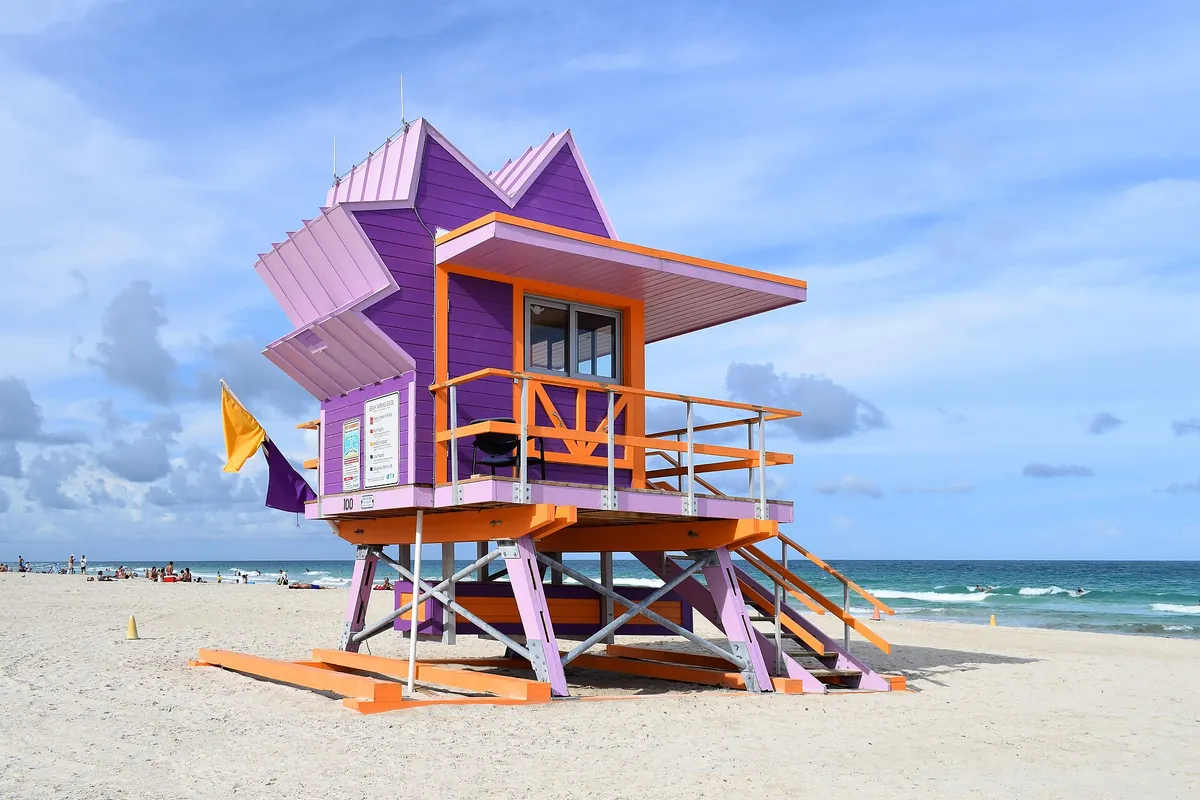
Miami International Airport has the warmest January afternoons of the stations in our table, at 76.2°F, with a 61.0°F low. It also has the most warm days in the table: an average of 27.1 January days at 70°F or warmer. Fort Lauderdale/Hollywood International is nearly the same at 75.6°F/60.9°F.
On the beach itself, afternoons tend to run a little cooler than at the inland airport. NOAA’s Miami Beach station normals are 73.6°F/61.2°F for January. Ocean water at Virginia Key, just off Miami, averages 72.5°F in January. For neighborhoods and hotels, see our guide to where to stay in Miami.
Naples and Fort Myers: sunny Gulf afternoons, cooler water
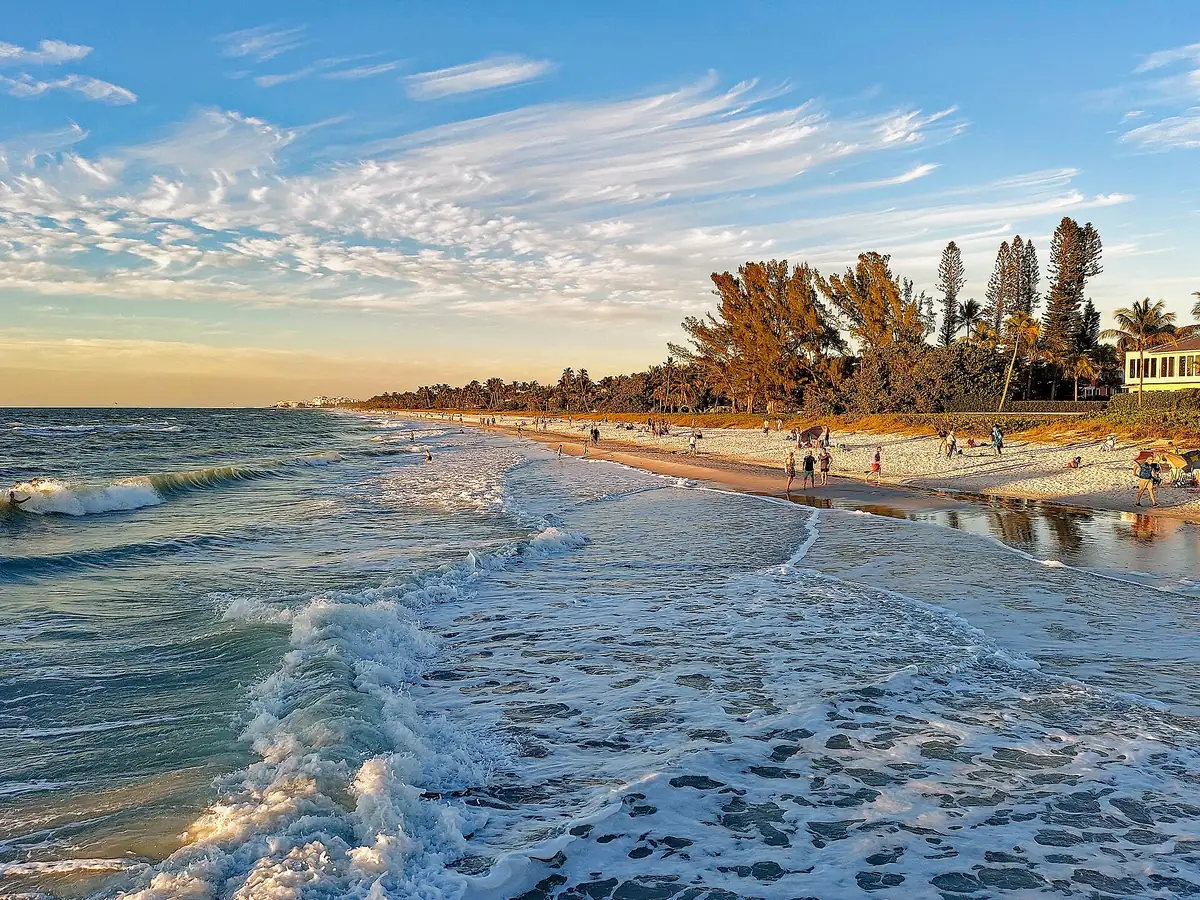
Southwest Florida has warm winter afternoons and one of the driest Januaries in this guide. Naples Municipal Airport averages 74.8°F/55.9°F in January, with just 1.68 inches of normal rain. Fort Myers’ Page Field is similar at 75.0°F/54.3°F, and February warms to 77.2°F in Naples and 78.0°F in Fort Myers.
Nights are cooler than on the Atlantic side: Naples averages 9.1 January nights at or below 50°F. The bigger difference is the water. NOAA lists average January water of 66.7°F at Naples, about 8 degrees cooler than at Lake Worth Beach in Palm Beach County. Those are beach-walk and sunset temperatures for many people more than long-swim temperatures. Our Naples vacation guide covers the beaches, towns from Old Naples to Marco Island, and golf. For shelling, Sanibel and a closer look at Marco Island, see our Marco Island and Sanibel guide.
Mild but not tropical: Vero Beach, Sarasota, St. Pete and Clearwater
North of Palm Beach County and Naples, winter is pleasant rather than hot. Vero Beach averages 73.3°F/52.2°F in January, and Sarasota-Bradenton 72.5°F/52.3°F. Around Tampa Bay, St. Petersburg’s Albert Whitted station averages 69.0°F/55.3°F, and Tampa International 71.3°F/52.8°F.
These are good choices for winter sightseeing, golf and walks on the sand, with warm-enough afternoons on most days. The Gulf is cool for swimming: NOAA averages 61.5°F at Clearwater Beach and 64.2°F at Venice in January. See our Clearwater and St. Pete vacation guide and Sarasota vacation guide. On the Atlantic side, Daytona Beach is cooler again, at 69.0°F/48.5°F in January.
The Panhandle in winter: Destin and Pensacola
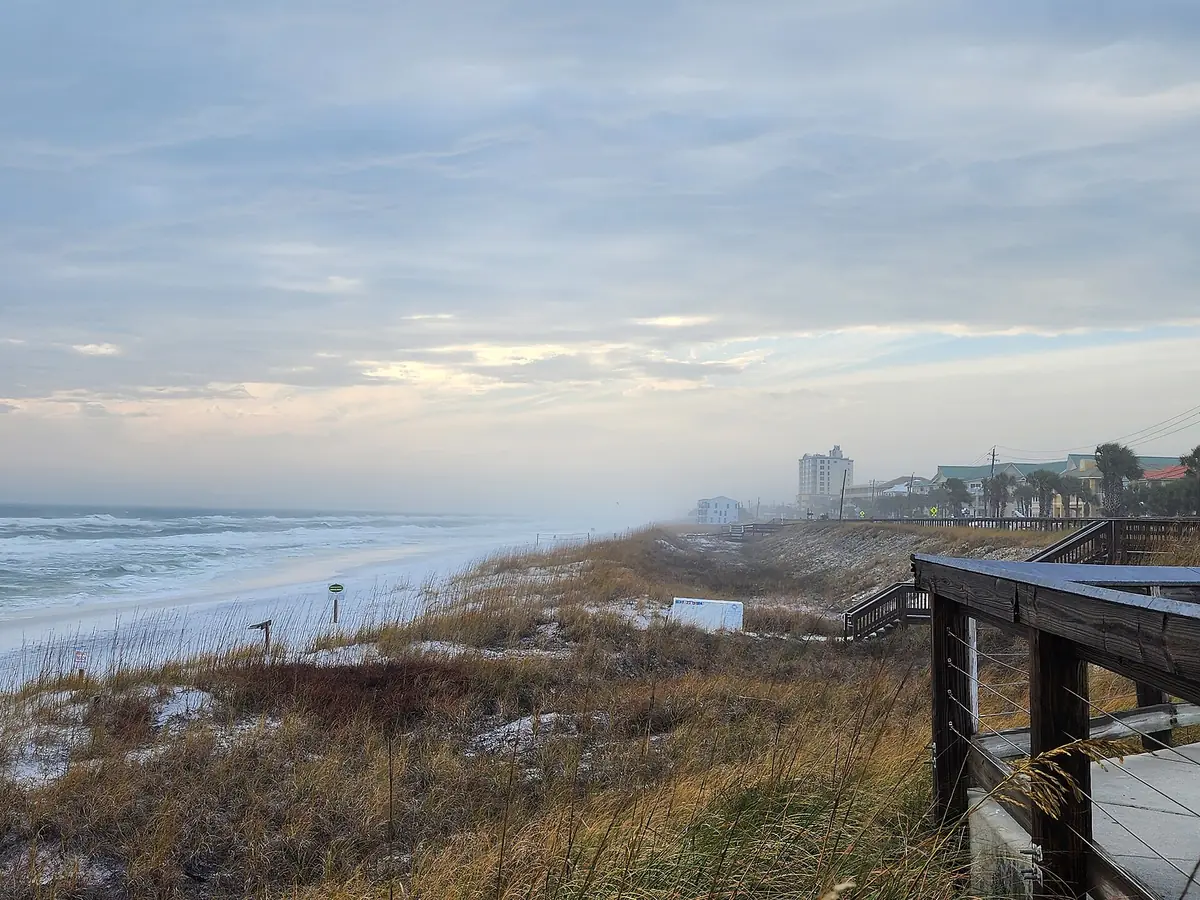
Florida’s Panhandle has a real winter. The Destin-Fort Walton Beach Airport normals are 63.1°F/45.3°F for January, and Pensacola International 62.7°F/43.7°F. Destin averages about 10 January nights at or below 40°F, and Pensacola about 13. Only about seven January days reach 70°F in either place.
The water is chilly too: NOAA averages 59.5°F in January at Panama City Beach and 56.9°F at Pensacola. Winter is still a fine time for quiet beach walks, seafood and golf, but it is not a swimming season. Save the Panhandle for spring through fall, and use our Destin vacation guide when you do.
How to choose your winter beach town: checklist
- Want to swim every day? Choose the Keys or the Atlantic coast from Palm Beach County south, where January water averages 72°F to 75°F.
- Want warm nights for outdoor dinners? Key West, Marathon, Miami and Fort Lauderdale have January lows above 60°F.
- Golf trip with beach time? Palm Beach County and Naples have warm afternoons and plenty of courses; see our golf trip guides.
- Want the driest weather? Marathon, Naples, Key West and Miami have the lowest January rainfall normals of the stations in this guide, all under 2 inches.
- Going north of Palm Beach or Naples? Plan on sightseeing and walks rather than swimming, and pack a jacket.
- Check the forecast before you pack. Normals are 30-year averages, not forecasts. Winter cold fronts can bring a few cool days anywhere in Florida.
- Book the right season. The Atlantic hurricane season runs June 1 to November 30, per the National Hurricane Center, so December through February falls outside it. Our hurricane season travel guide covers the rest of the year.
How we sourced these numbers
Air temperatures are NOAA’s official 1991–2020 U.S. Climate Normals, downloaded from NCEI’s monthly normals files for each station on November 25, 2026. “High” and “low” are the normal daily maximum and minimum for the month. Counts of nights at or below 50°F or 40°F and days at 70°F or warmer are NOAA’s own monthly normals for those thresholds, as defined in the NCEI normals documentation. Most stations are airports, so conditions right on the beach can differ by a few degrees.
Water temperatures are the monthly averages in NOAA NCEI’s Coastal Water Temperature Guide table. NCEI decommissioned the guide as a product on May 5, 2025, but still publishes the table; treat its averages as a general guide rather than a forecast. You can look up the normals for any station yourself with the National Weather Service NOWData climate tool.
FAQ
What is the warmest beach town in Florida in winter?
Key West. NOAA’s 1991–2020 normals give Key West International Airport a January average high of 75.8°F and low of 65.5°F, the warmest January average temperature (70.6°F) of any major Florida weather station. Marathon in the Middle Keys is almost the same.
Where in Florida is the ocean warmest in January?
The Atlantic coast from Palm Beach County south, plus the Keys. NOAA’s Coastal Water Temperature Guide lists a January average of 74.5°F at Lake Worth Pier in Palm Beach County, 72.5°F at Key West and 72.5°F at Virginia Key near Miami. Gulf beaches are much cooler, about 67°F at Naples and 61.5°F at Clearwater Beach.
Is Palm Beach warm enough to swim in winter?
For many people, yes. NOAA’s normals for Palm Beach International Airport show a January average high of 74.7°F, and NOAA lists average January water of 74.5°F at Lake Worth Pier. Nights are cooler, averaging 57.9°F in January, so bring a light layer for evenings.
Is Naples or Palm Beach warmer in winter?
Their January afternoons are almost the same: 74.8°F at Naples Municipal Airport and 74.7°F at Palm Beach International. Palm Beach has milder nights (57.9°F versus 55.9°F) and much warmer ocean water (74.5°F versus 66.7°F in January), while Naples gets less rain.
Is the Florida Panhandle warm in winter?
Not really. Destin-Fort Walton Beach Airport averages a 63.1°F high and a 45.3°F low in January, and Pensacola 62.7°F and 43.7°F. NOAA lists average January water of 56.9°F at Pensacola. It is a good time for quiet beach walks and golf, not swimming.
What is the warmest month of winter in Florida?
December and February are a little warmer than January at every station in this guide. At Palm Beach International, for example, the normal high is 76.5°F in December, 74.7°F in January and 76.7°F in February.
More Florida guides
Browse every destination on our Florida beach vacation guides hub, or start with the Florida vacation guide. For the warmest winter beaches, read our guides to Palm Beach County, the Florida Keys, Miami and Naples. For milder winter trips, see Clearwater and St. Pete, Sarasota and Destin.
Plan this trip
Compare fares for this trip, then book with the airline or agency.
Compare fares, then continue to the airline or agency to book.