Belize Travel Guide: Reef, Cayes, Ruins and When to Go
Updated November 2026. Entry rules, currency and ATM Cave policies were checked against official sources on November 27, 2026. Some links and the flight search on this page are affiliate links; we may earn a commission if you book, at no extra cost to you. See our Affiliate Disclosure.
Belize sits on the Caribbean coast of Central America, with a barrier reef, small cayes and a jungle interior that you can combine in one trip. English is the official language, the U.S. dollar is widely used, and the country is compact enough for a reef-and-ruins itinerary in a week. This Belize travel guide helps you choose between the cayes and the mainland, understand the Blue Hole and ATM Cave, and get the entry rules right.
Quick answers
- Best first base: Ambergris Caye (San Pedro) for the widest choice of hotels, restaurants and reef trips; Caye Caulker if you want a smaller, more walkable island.
- Best mainland add-on: San Ignacio, for Maya sites and the ATM Cave, which you may visit only with a licensed guide.
- Money: the Belize dollar is fixed at BZ$2 = US$1, and U.S. dollars are widely accepted, according to Travel Belize.
- Entry: complete the official online arrival and departure declaration before you travel, and carry a passport and return ticket.
Ambergris Caye and Caye Caulker
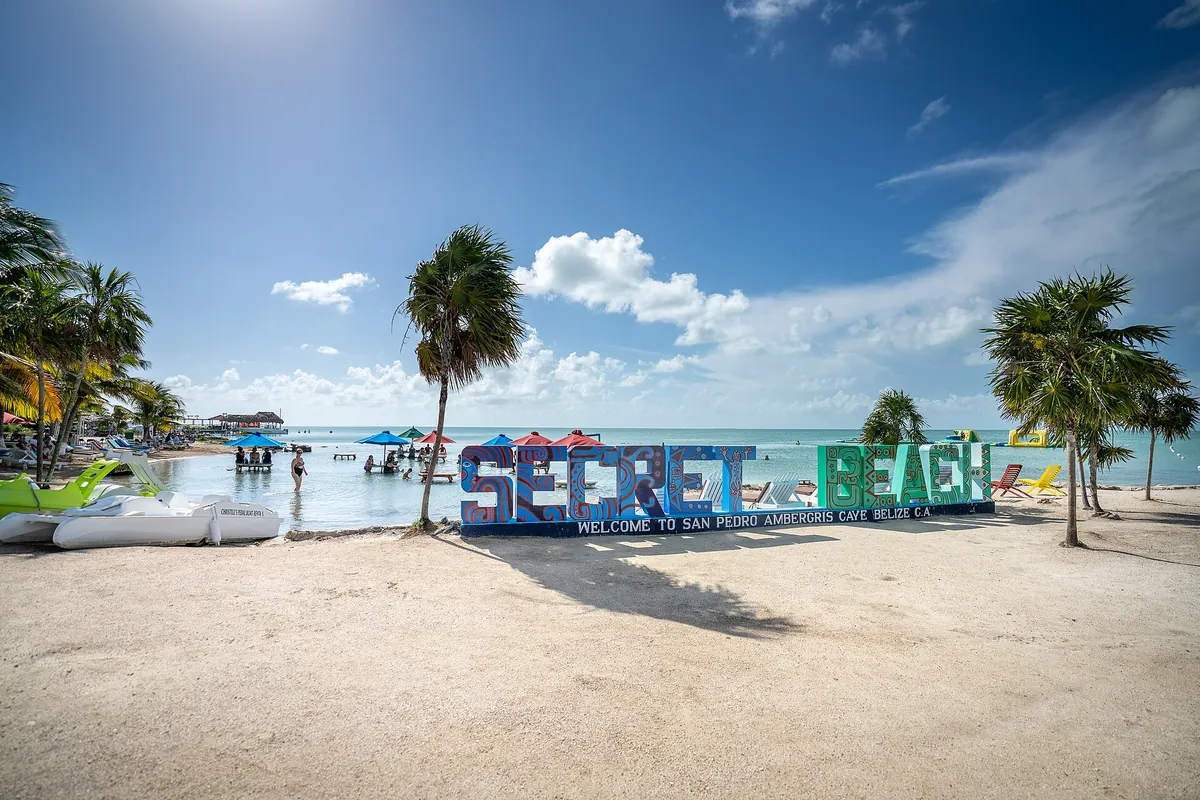
Most first-time visitors spend at least part of the trip on the cayes, off Belize’s northern coast. Ambergris Caye, with the town of San Pedro, is the largest and busiest. It has the most lodging, from simple rooms to large beach resorts, and it is the usual departure point for Hol Chan Marine Reserve, Shark Ray Alley and other nearby reef sites. Secret Beach, on the island’s lagoon side, has become a popular swimming and day-use area; it is lively rather than secluded, despite the name.
Caye Caulker is smaller, flatter and more compact, with golf carts and bicycles instead of much car traffic. The Split, a channel cut by a hurricane, is the island’s informal swimming spot. Many travellers prefer Caulker for a slower pace and slightly lower costs, then take boats to the same reef sites. You can also split the week between the two islands; the water taxi ride is short.
Both cayes are reached from Belize City by water taxi or a short domestic flight after you land at Philip S. W. Goldson International Airport (BZE), just outside the city. Belize City itself is usually a transit point, not the main place to stay.
The Belize Barrier Reef and the Blue Hole
The Belize Barrier Reef Reserve System is a UNESCO World Heritage site and the country’s main natural draw. You do not have to be a certified diver to see it: snorkeling at Hol Chan and similar reserves is the standard first outing. Use a licensed operator, wear reef-safe sunscreen if it is required or requested, and follow the reserve rules, which exist to protect the coral.
The Great Blue Hole, in Lighthouse Reef Atoll, is a circular marine sinkhole that Travel Belize describes as roughly 1,000 feet across and more than 400 feet deep. You can dive it, snorkel the rim on some trips, or see it from the air. It is not a casual add-on from the beach: it is a long day-boat excursion or a flight, and diving it is a serious deep dive, not a first-time open-water outing. If the Blue Hole is a priority, book a reputable operator early and be honest about your dive experience. If it is not, you will still have excellent reef days closer to Ambergris or Caulker.
The mainland: San Ignacio, ruins and the ATM Cave
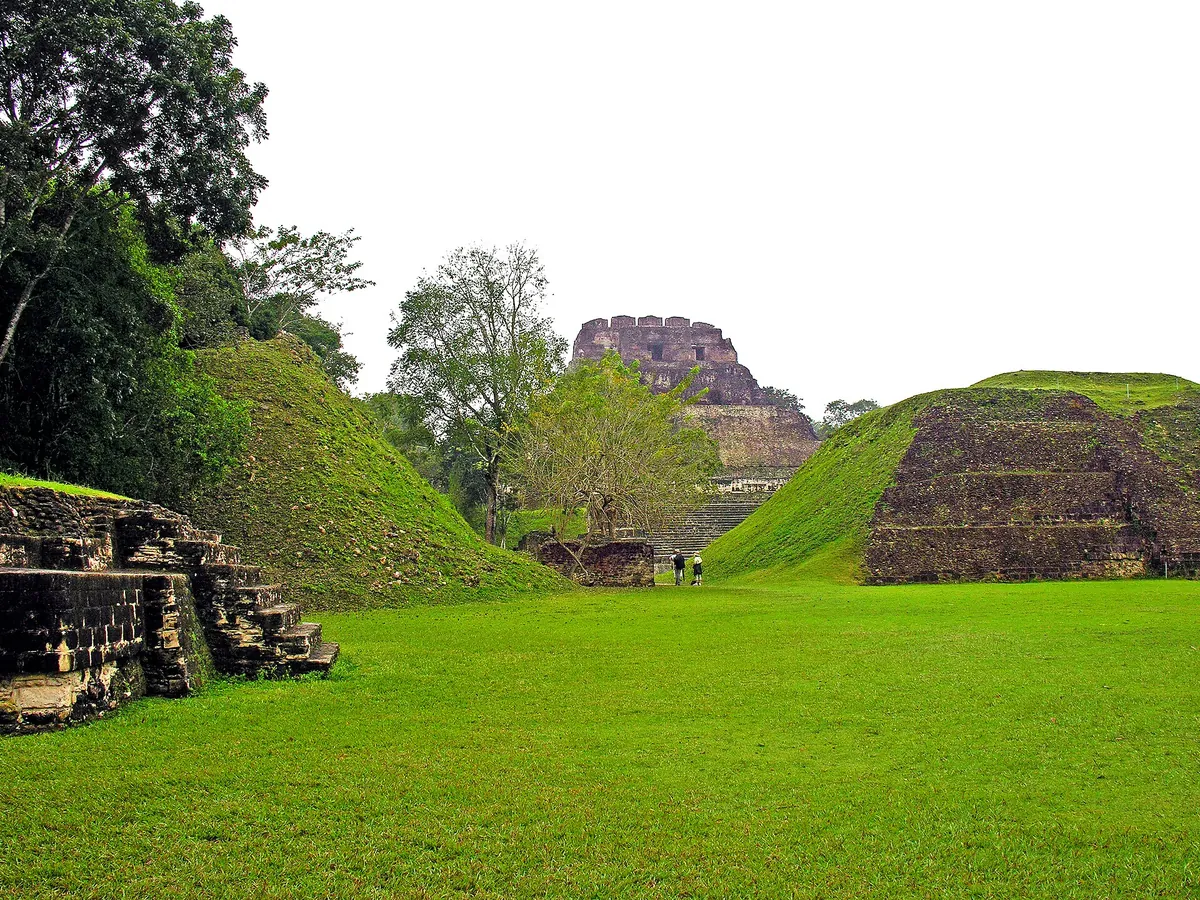
The western mainland, around San Ignacio in the Cayo District, is the usual base for Maya sites and cave trips. Xunantunich, reached by a short ferry across the Mopan River near the Guatemalan border, is a rewarding half day, with the main temple, El Castillo, rising above the plaza. Cahal Pech sits closer to town. Tikal, in Guatemala, is a longer day trip that some visitors add; it involves an international border, so check current crossing rules.
Actun Tunichil Muknal, the ATM Cave, is a guided hike and swim into a cave that holds Maya artifacts and remains. The Institute of Archaeology / NICH requires all visitors to go with a licensed tour operator, and it says group visits should be booked in advance. Children must meet a 40-inch height requirement. Entrance tickets must be purchased in advance at the Cahal Pech ticket office or through the official e-ticketing site. Cave-site rules can be stricter than the general reserve photography policy, so confirm current camera rules with your operator and the Institute before you go.
On the southern coast, Hopkins and Placencia offer a different beach stay: smaller towns, Garifuna culture in Hopkins, and access to the southern reef and jungle rivers. They work well if you want a quieter alternative to San Pedro, or a second stop after the north.
When to go to Belize
The drier, busier season generally runs from about December through April, which is also when the cayes and San Ignacio are most in demand. The rainy season typically builds in summer, and Belize is inside the Atlantic hurricane season from June 1 to November 30, especially along the coast and cayes. Shoulder months can be a good compromise if you book flexible lodging. See our hurricane season travel guide if you are travelling in that window.
Belize is warmer and more humid than a Florida winter trip, and rain can arrive in short bursts even in the dry season. For a January Caribbean comparison, including islands with official sunshine and rainfall figures, see the best Caribbean islands to visit in January.
Money, language and entry rules
Travel Belize states that the Belize dollar is locked at BZ$2 = US$1, that U.S. dollars are widely accepted, and that many tours and hotels are priced in U.S. dollars. ATMs are available in the main tourist towns, including San Pedro, Caye Caulker, San Ignacio, Placencia and Belize City. English is the official language, which makes logistics easier for many North American visitors; you will also hear Kriol, Spanish and Maya languages.
The official Travel Belize immigration page says visitors need a passport valid for at least 30 days after arrival (with a longer validity if you are in transit to a country that requires it), a return ticket, and sufficient funds. Visitors are generally given a 30-day stay, which can be extended through Immigration. Citizens of the United States, Canada, the United Kingdom, the European Union, and Caribbean and Central American countries do not need a tourist visa under the rules published there. Travel Belize also now uses a free online arrival and departure declaration, which you should complete before you travel.
Some other official government travel pages tell their citizens to have six months of passport validity for Belize. That is stricter than the 30-day rule on Travel Belize. When sources disagree, use the longer validity if you can, and recheck the official Belize page and your own government’s advice before you fly.
Getting around Belize
The usual pattern is to land at BZE, then leave Belize City the same day by water taxi or domestic flight to the cayes, or by road or flight west to San Ignacio. Water taxis and domestic airlines run frequent caye connections, but schedules change; confirm them close to travel. On Ambergris, golf carts are the common way to get around. A mainland rental car is useful if you plan to link Hopkins, Placencia and the west, but it is not necessary if you are staying on one island and booking tours.
If you are combining Belize with Mexico’s Caribbean coast, Cancun is a separate trip with its own entry rules and tourist tax. See our guide to visiting Cancun rather than treating the two as a single unplanned hop.
FAQ
Is Belize better as a beach trip or a jungle trip?
You can do both. Stay on Ambergris Caye or Caye Caulker for the reef, then add three or four nights in San Ignacio for ruins and the ATM Cave. A week is enough for a two-stop trip if you do not try to see the south as well.
Can beginners go to the Great Blue Hole?
Snorkel-the-rim or flyover trips are the realistic options for most visitors. Diving the Blue Hole is a deep, advanced-profile dive, not a first reef dive. Travel Belize notes that the site is reached by a day dive boat, a live-aboard or an air tour. Choose the format that matches your experience.
What are the official rules for the ATM Cave?
You must go with a licensed tour operator, book in advance, and buy the official entrance ticket ahead of time. The Institute of Archaeology requires children to be at least 40 inches tall. Confirm meeting points, fitness expectations and photography rules when you book.
Do I need a visa for Belize?
U.S., Canadian, U.K., E.U., Caribbean and Central American citizens do not need a tourist visa for a standard short stay, according to Travel Belize. You do need a valid passport, a return ticket, sufficient funds and the completed online declaration. Stays beyond 30 days require an extension.
When is hurricane season in Belize?
The Atlantic hurricane season runs from June 1 to November 30. The cayes and the coast are more exposed than inland Cayo. Book flexible rates if you travel then, and read our hurricane season travel guide.
More beach and Caribbean guides
For another English-speaking Caribbean island with easier direct flights from the eastern United States, see our Barbados travel guide. For a Florida-plus-Caribbean winter comparison, use the January islands guide and the Caribbean vacation guides hub.
Plan this trip
Compare fares for this trip, then book with the airline or agency.
Compare fares, then continue to the airline or agency to book.